Obstetrics
Used when growth, fluid or movements give concern, with the frequency of surveillance set by the findings.
Tests for foetal wellbeing
Tests for foetal wellbeing show how the baby is coping and how the placenta is working. At Sradha Women Care these tests — Amniotic Fluid Index, Non-Stress Test and Doppler Study — are done in the clinic by the gynaecologist who is managing your pregnancy.
Performed in the clinic as part of antenatal care and as a day care / out-patient service.
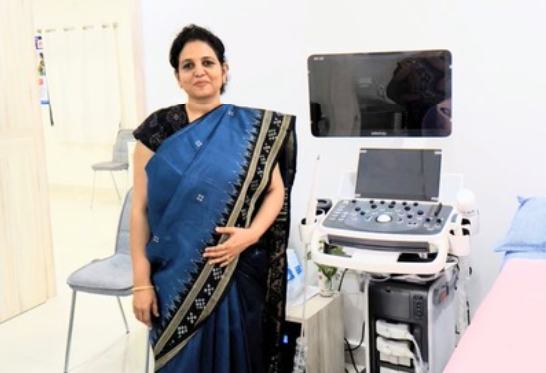
Pregnancy Ultrasound Scans for foetal growth and Amniotic Fluid Index, read by the doctor who examined you and compared against your earlier scans.
The non-stress test records the baby’s heart rate over 20–40 minutes and how it responds to movement.
A reactive trace — accelerations with movement — is reassuring. A flat or decelerating trace is repeated or followed by Doppler and a decision the same day.
Repeated at intervals of two to three weeks to plot the baby’s weight against the expected curve and detect intrauterine growth restriction (IUGR) early.
In summary
Every test result is explained to you and written into your record, with what it means for the next visit and, where necessary, for the timing of delivery. Nothing is left as ‘we’ll see’.
If any of these apply, book a visit rather than waiting for the next routine check.
Antenatal care from the first missed period to delivery, with the visit schedule set to your own risk profile.
Pregnancies that need closer surveillance, with defined thresholds for review and admission rather than reassurance alone.
The intended route of delivery is agreed with you before term, with the reasons stated in writing.